Decorate Twice, Buy Once: How Virtual Design Games Are Quietly Redecorating America
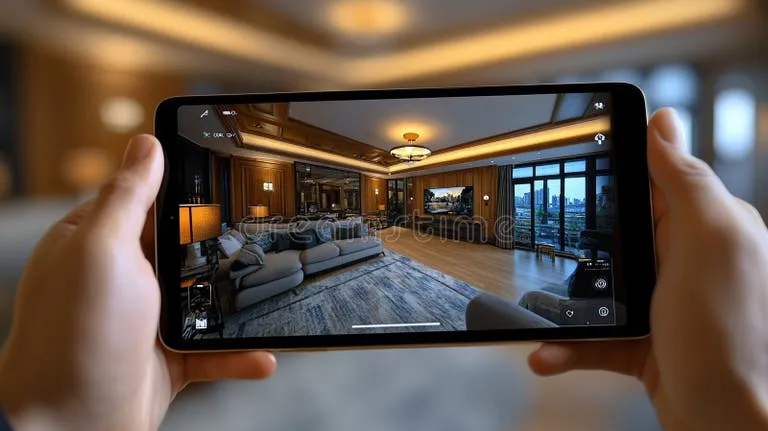
Photo: virtual home interior design game on tablet screen modern living room, via thumbs.dreamstime.com
There's a moment happening in living rooms across the country — usually late at night, phone in hand — where someone designs their absolutely perfect apartment. Warm wood floors. That particular shade of sage green. A reading nook by a window that their actual apartment, you know, the one with the radiator and the one outlet, absolutely does not have.
Then something interesting happens. They close the game, open a shopping app, and start searching for that exact lamp.
The Try-Before-You-Buy Effect
Home design and simulation games have exploded into one of the most quietly influential forces in American decorating. These platforms let players build, furnish, and restyle spaces with zero financial risk — and that changes how people shop for real. When you've lived with a virtual version of a bold accent wall for three weeks, committing to it in real paint stops feeling like a gamble.
Retailers have noticed. Design-forward furniture brands are increasingly the ones players screenshot and hunt down. The game becomes a mood board; the mood board becomes a shopping cart. It's 'decorate twice, buy once' — and it's saving people from expensive decor regrets while pushing them toward bolder choices than they'd have made cold.
From Player to Pro: The Virtual Makeover Economy
Here's where it gets genuinely interesting for the creator crowd. A whole ecosystem has grown up around people who are exceptionally good at virtual design. We're talking about creators who post speed-build videos, room reveals, and before-and-after transformations that rack up serious followings. Some parlay that into real-world design consulting. Others get paid to stage digital spaces for brands or game developers.
The skill transfer is real. Composition, color theory, lighting, spatial flow — the fundamentals don't care whether your canvas is a game engine or a two-bedroom in Ohio. A generation of designers is emerging whose portfolio started as screenshots.
Why Americans Are Designing in Pixels First
A few forces are converging here. Housing costs mean more people are renting longer, so low-commitment decorating advice is gold — you can't knock down a wall in a rental, but you can test one virtually. Remote work made the home itself a higher-stakes environment worth investing in. And honestly, design games are just relaxing in a way that scrolling a furniture site isn't. You're not browsing; you're building.
There's also something emotionally satisfying about it. A simulation gives you a perfect version of a space — no budget caps, no landlord — and that scratch on the itch often clarifies what you actually want. Most people discover their 'dream room' is less about stuff and more about a feeling: cozy, calm, a little bit them.
Bring the Dream Home
If you've got a virtual space you've been quietly perfecting, consider it your design thesis. Pull one element out — the palette, the lighting approach, that one statement chair — and bring it into reality. Start small and physical: a rug, a lamp, a paint sample taped to the wall.
The utopia in the game isn't really about the furniture. It's proof of what you already know you love. The download was just the rehearsal. Your actual dream room has an address — it just needs you to start moving the furniture.