When Perfect Worlds Break Real Ones: The Strange Psychology of Game-Induced Disillusionment

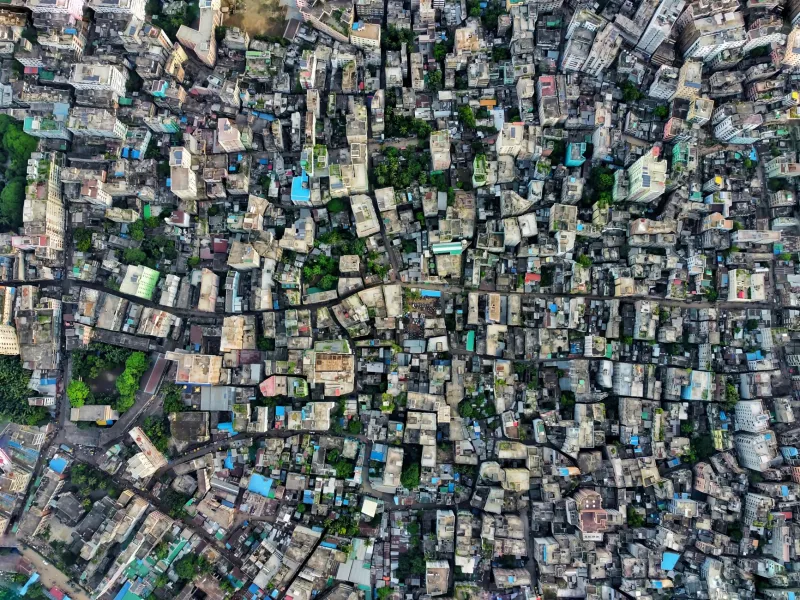
Photo: Stiller Beobachter from Ansbach, Germany, CC BY 2.0, via Wikimedia Commons
You've probably felt it. You close your laptop after six hours inside some stunningly rendered open world — golden light filtering through ancient forests, a bustling city that actually makes sense, NPCs who seem to genuinely care whether you live or die — and then you look around your apartment. Dishes in the sink. A notification from your landlord. Traffic noise bleeding through a window that won't quite seal right.
Something shifts. Not dramatically, not in a way you'd want to explain to your coworkers. But the gap between there and here feels uncomfortably wide.
This isn't a niche gamer complaint. It's a psychological phenomenon researchers are starting to take seriously, and it sits right at the heart of what makes modern game design so powerful — and occasionally so destabilizing.
The Architecture of Impossible Comfort
Game designers — especially at studios behind titles like The Legend of Zelda: Breath of the Wild, Red Dead Redemption 2, or Stardew Valley — have become extraordinarily good at one thing: manufacturing a sense of rightness. Every visual element, every ambient sound cue, every pacing decision is engineered to make you feel like you belong there. The world responds to you. It scales to your abilities. It rewards your curiosity.
Real life, famously, does none of these things on a reliable schedule.
Environmental psychologists call this "restorative experience" — the feeling of being in a space that replenishes your mental resources rather than depleting them. Natural settings used to be the gold standard for this. But increasingly, well-designed virtual environments are hitting those same neurological buttons, sometimes more precisely than a walk in an actual park.
The problem isn't that the experience feels good. The problem is what happens when it ends.
Disenchantment Has a Name (Several, Actually)
In clinical circles, the closest framework is something called post-vacation blues, that well-documented slump after returning from somewhere wonderful. But the game version carries an extra layer of cognitive dissonance, because the "vacation" was also a place where you were the hero, where your choices visibly mattered, and where the aesthetic was curated specifically to delight you.
Some researchers have started using the term game-world hangover informally, though the more academically palatable framing involves concepts like presence (the sense of actually being somewhere virtual) and re-entry friction (the adjustment cost of returning to a less responsive environment).
For a growing slice of American gamers — particularly millennials and Gen Z players who came of age alongside increasingly immersive technology — this friction is real and recurring. Reddit threads on r/gaming and r/truegaming are full of posts that start with some version of: "Does anyone else feel weirdly sad after finishing a great game?" The comments are never short.
What Game Designers Know That Urban Planners Don't
Here's where it gets genuinely interesting. The best game worlds aren't actually perfect in a sterile, frictionless sense. They're perfect in a more nuanced way — they're meaningfully imperfect.
Dark Souls is brutally hard. Disco Elysium is emotionally devastating. The Last of Us will ruin your afternoon. These worlds are gorgeous and deeply uncomfortable in equal measure. And yet they produce some of the strongest attachment responses in gaming.
What designers understand — often intuitively — is that humans don't actually want a world with no resistance. We want a world where resistance means something. Where failure teaches rather than merely punishes. Where beauty exists alongside struggle in a ratio that feels earned.
The disillusionment players feel after logging off isn't really about wanting reality to look like a video game. It's about wanting reality to function with that same sense of internal logic and emotional coherence. We want our effort to translate. We want the environment to be legible.
That's not a childish fantasy. That's a pretty reasonable description of what psychologists call a high-quality environment — one that supports human flourishing. The uncomfortable truth is that a lot of American life, from car-dependent suburbs to bureaucratic healthcare systems to algorithmically chaotic social media, fails that test pretty badly.
The Belonging Problem
There's another layer worth sitting with: community. Even in single-player games, designers build worlds that feel inhabited in ways that matter. Townsfolk remember your name. Factions have histories. The world has lore that rewards attention.
For players who live in transient cities, work remote jobs, or simply haven't found their people yet, that simulated sense of belonging can hit hard. Not because the player is confused about what's real, but because the emotional need being met is completely genuine — and not always being met anywhere else.
This is where the conversation gets a little thornier, because the instinct is to pathologize the gaming. But maybe the more honest response is to ask what it says about our actual social infrastructure that a crafted virtual village can out-belong a real neighborhood.
Finding the Middle Ground (Without Logging Off Forever)
None of this means games are bad for you, or that you should feel guilty for loving a world that was built to be loved. The goal isn't to flatten the experience — it's to understand what it's pointing at.
Some players find that the disenchantment actually becomes motivating. The gap between the world they want and the world they have starts functioning less like a source of despair and more like a design brief. What would it look like to bring more intentionality — more craft — to the spaces and relationships in their actual lives? That's not a naive question. It's the kind of thinking that leads people to actually fix their apartment, invest in a local community, or start building something creative.
Game designers spend years thinking about what makes a space feel worth inhabiting. Maybe the rest of us should steal a little of that energy.
At Yu-Topia, we talk a lot about what a better world could look like — and we genuinely believe that the imagination required to build one often gets its first workout inside a controller. The trick is letting those worlds inspire you rather than indict you.
Close the game. Look around. Then ask yourself: what would I actually change?
That question might be the most important thing a perfect virtual world ever gave you.