Logged In, Checked Out: How Chasing Digital Utopia Is Hollowing Out Our Neighborhoods

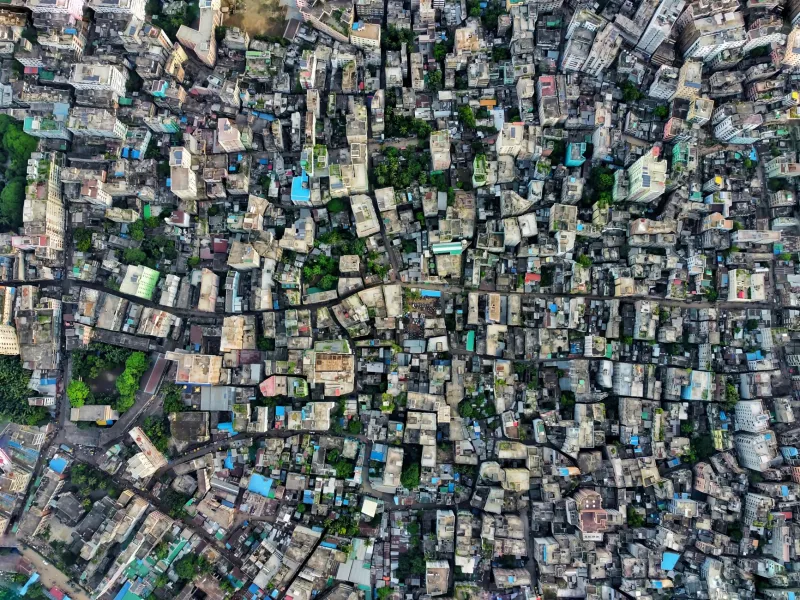
Photo: Semowe, CC0, via Wikimedia Commons
There's a certain kind of magic that happens when you first step into a richly built digital world. The skyline is clean, the systems make sense, and nobody's leaving passive-aggressive notes on your car. For a lot of us, that feeling — that finally, a place that works — is genuinely intoxicating. And honestly? We get it. That's kind of why Yu-Topia exists.
But here's the thing nobody's saying loudly enough: every hour we spend perfecting our virtual homesteads, grinding toward some pixelated paradise, or scrolling through the next promised metaverse platform is an hour we're not spending on the messy, imperfect, deeply human work of building the places we actually live.
And that trade-off? It's starting to show.
The Utopia We Outsourced
America has always had a complicated relationship with the idea of the perfect community. From the utopian communes of the 1800s to the planned suburbs of the postwar era, we keep reaching for the ideal neighborhood — and keep finding it harder to sustain than we imagined. Now, in the 2020s, we've essentially outsourced that dream to tech companies.
The pitch from platforms like Meta's Horizon Worlds, Roblox's creator economy, and a dozen other metaverse-adjacent spaces is seductive: come build something better here. Better than your underfunded local park. Better than your city council that can't agree on a stoplight. Better than your neighbor who blasts music at 11 p.m.
Sociologist Dr. Priya Anand, who studies digital displacement at a research institute in Chicago, puts it bluntly: "We're not just spending time in these spaces — we're transferring our civic imagination to them. When people start believing that the good community is the one they can design from scratch online, they stop believing they can fix the one outside their door."
That's not a small thing. That's a fundamental shift in where Americans are putting their hope.
The Social Energy Economy
Think of your social energy like a budget. You've only got so much of it — time, attention, emotional bandwidth, actual money. Every dollar spent on a virtual land parcel or a premium avatar skin is a dollar not spent on a local fundraiser. Every evening lost to an online guild is an evening not spent at a neighborhood association meeting or coaching Little League.
None of that is inherently bad. Rest is real. Play is real. Digital friendships are real. But community organizer Marcus Webb, who runs a civic engagement nonprofit in Atlanta, has watched the math play out in painful ways over the past few years.
"We used to struggle to get thirty people to a neighborhood cleanup," he says. "Now we're lucky to get ten. And when I talk to folks, they're not sitting home doing nothing — they're busy. Just busy somewhere else. Somewhere digital."
Webb is careful not to villainize gaming or online spaces. "I play games too," he laughs. "But there's a difference between using those spaces to recharge and using them to replace the harder work of showing up in real life."
The distinction matters. Escapism has always been part of human culture. What's new is the scale and the intentional design of these digital worlds to keep you there as long as possible — and to make real life feel comparatively dull and broken by contrast.
Engineered Dissatisfaction
Here's where it gets a little uncomfortable for those of us who love games and digital culture (again — us, included).
The best virtual worlds are engineered to feel better than reality. That's a feature, not a bug. Clear feedback loops, instant rewards, visible progress bars, communities that form around shared interests rather than shared zip codes. Of course it feels better. It's designed to.
But that design has a side effect: it makes the friction of real community feel unbearable by comparison. Sitting through a two-hour city council meeting about a zoning variance doesn't give you XP. Organizing a block watch doesn't come with a loot drop. And your actual neighbors — with their complicated histories, their different politics, their dog that won't stop barking — don't come with a mute button.
"We're training people to expect designed experiences," says Dr. Anand. "And organic community is profoundly undesigned. It's chaotic and slow and sometimes deeply frustrating. When you've been marinating in optimized digital environments, that friction can feel like failure rather than just... life."
The Quiet Withdrawal
The data backs this up in ways that should give us pause. Civic participation metrics in the U.S. have been declining for decades, but the steepest drops in volunteering, local political engagement, and even neighborly interaction correlate uncomfortably well with the rise of immersive digital platforms. The Pew Research Center has repeatedly flagged that Americans report having fewer close local ties than previous generations — and more online-only friendships.
This isn't a screed against the internet. Online communities can be lifelines, especially for people in rural areas, LGBTQ+ folks in less accepting environments, or anyone who's ever found their people in a Discord server when their hometown couldn't offer them. That's real and it matters.
But there's a difference between supplementing your local life with digital connection and substituting one for the other. And a growing number of researchers, organizers, and even some game designers are worried we've slid from the first into the second without noticing.
Reclaiming the Block
So what does a healthier balance actually look like? A few ideas worth chewing on:
Treat local engagement like a game. Seriously. Some cities are experimenting with gamified civic apps that reward participation in local meetings, cleanups, and community events. It sounds gimmicky, but if we're wired to respond to those mechanics, why not use them for good?
Set a real-world side quest. For every gaming session or metaverse hour, commit to one small IRL action — introduce yourself to a neighbor, attend a local event, volunteer an hour somewhere. Keep it low-stakes. Just keep it real.
Notice the contrast effect. When real life starts feeling unbearably boring or frustrating after a long gaming session, that's the design talking. Name it. It doesn't mean real life is broken — it means your brain just spent hours in a hyper-optimized environment.
Invest in local third places. Coffee shops, libraries, parks, community centers — these are the infrastructure of real-world community. Support them. Use them. Show up.
Both Worlds Need You
Look, nobody here at Yu-Topia is about to tell you to log off forever. We believe in the power of digital worlds, creative communities, and the genuine joy that comes from building something beautiful online. That's literally what we're here for.
But a real utopia — the kind worth actually living in — isn't something you load up on a server. It's built slowly, imperfectly, in the real spaces where people share air and sidewalks and school districts and futures.
The dream world and the real world aren't enemies. But right now, one of them is getting a lot more of our best energy than it probably deserves. And the other one — your neighborhood, your city, your actual community — is waiting.
Maybe it's time to respawn out there.