The Setup Trap: How Obsessing Over Your Perfect Gaming Space Is Quietly Killing Your Creativity

Photo: Unknown, Public domain, via Wikimedia Commons
Scroll through any gaming subreddit on a Sunday afternoon and you'll find the same ritual playing out in real time. Someone posts a photo of their desk. The monitors are perfectly aligned. The lighting is dialed in. The chair cost more than most people's first car. The comments roll in — "Goals," "This is it," "I need this in my life." And somewhere in that feedback loop, something quietly breaks.
Because here's the thing nobody's saying out loud: the pursuit of the perfect gaming space might be one of the most creativity-killing habits in the hobby right now.
When the Setup Becomes the Game
There's a psychological concept called goal displacement — where the process of preparing to do something gradually replaces the thing itself. Athletes fall into it when they spend more time researching training gear than actually training. Writers fall into it when they're still hunting for the right notebook six months after deciding to start a journal.
Gamers are falling into it too, hard.
The setup has become its own genre of content, its own competition, its own reward system. And while there's nothing inherently wrong with wanting a comfortable, functional space, something shifts when optimization becomes the primary creative outlet. When you've spent three weekends perfecting your cable management, it starts to feel like you've done something — even if you haven't actually played, explored, created, or connected with anything meaningful inside a game.
The desk becomes the destination. And the actual play? An afterthought.
The Sterile Space Problem
Here's a counterintuitive truth that designers, artists, and psychologists have been circling for years: constraints breed creativity. Limitations force the brain to improvise, to problem-solve, to find unexpected paths through narrow spaces.
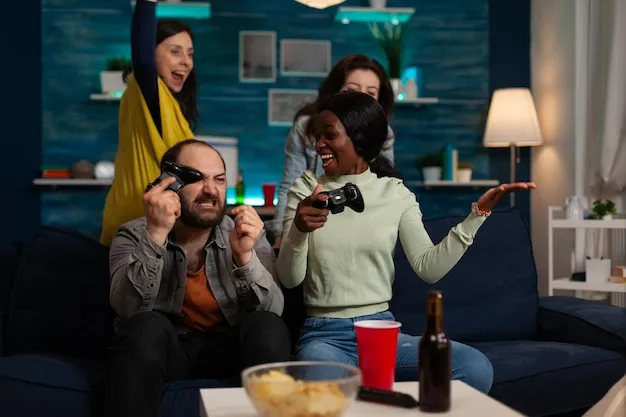
Think about where your best gaming memories actually came from. Was it the session where everything was perfectly calibrated and optimized? Or was it the time you and your cousin crammed onto a couch with one controller between you, figuring out how to take turns during boss fights? Was it the ergonomic setup with the perfect monitor refresh rate, or was it the summer you played on a borrowed laptop with a cracked trackpad and somehow fell completely in love with an RPG you'd never have tried otherwise?
Imperfect environments create friction. And friction — the right kind — sparks ingenuity.
A perfectly sterile setup removes that friction entirely. Everything is smooth. Everything is optimized. And ironically, that smoothness can flatten the experience. There's nothing to push against, nothing to adapt around, no unexpected variable forcing you to engage differently with the space or the game.
The Aesthetic Cage
There's another layer to this worth talking about: the aesthetic pressure that comes with a curated setup.
Once you've built something beautiful — a coherent color palette, a specific vibe, a space that photographs well — you become weirdly reluctant to mess with it. That pile of game cases you'd normally leave scattered across the desk? Can't do that anymore. The sticky notes with quest reminders you'd slap on the monitor bezel? Those would ruin the look. The random action figure your friend gave you that has no business being on a gaming desk but makes you smile every time you see it? Doesn't fit the aesthetic.
The space stops being yours and starts being a performance. You're maintaining a brand rather than inhabiting a creative environment.
And when a space becomes performative, it stops being generative. You're no longer playing in it — you're playing for it.
The $3,000 Creativity Blocker
Let's get specific about something that doesn't get said enough: expensive, high-end setups can create a psychological pressure to perform that actively undermines experimental, exploratory play.
When you've invested serious money into a space, there's a subtle but real expectation — often self-imposed — that the play that happens there should be serious too. Efficient. Productive. Worthy of the setup. Suddenly you're less likely to boot up a weird indie game you found for five bucks. Less likely to spend an afternoon just wandering around in a game with no objective. Less likely to let yourself be bad at something new, because the environment itself feels like it demands competence.
Compare that to the kid gaming on a beat-up desktop in a cluttered bedroom. There's zero pressure. The space doesn't expect anything. So the play can be anything — weird, exploratory, messy, surprising. That's where the magic lives.
Reclaiming the Mess
None of this is an argument against having a nice setup. Comfort matters. Good lighting protects your eyes. A decent chair is genuinely worth the investment for your back. This isn't about performative minimalism or rejecting quality.
It's about recognizing when the setup has become a substitute for the experience itself — and deliberately reintroducing a little chaos.
Leave the game cases out. Put the weird action figure back on the desk. Play something on your laptop in a different room just to feel the change of scenery. Boot up a game in a genre you've never touched and let yourself be completely lost in it for a couple hours without worrying whether the experience is "worthy" of your monitor's refresh rate.
The most creatively alive gaming moments tend to happen when you stop managing the environment and just live in it.
The Yu-Topia Angle
Here at Yu-Topia, we're big believers in the idea that utopia isn't a fixed destination — it's a living, breathing, evolving thing. A perfect world that stops growing stops being perfect. The same logic applies to your gaming space.
The dream isn't a setup so pristine it never changes. The dream is a space that reflects who you are right now, that shifts as your interests shift, that has room for the unexpected thing that catches your eye, the random game a friend recommended, the weird creative tangent you didn't plan for.
Perfection, when it's rigid, becomes a cage. The best creative environments — gaming or otherwise — are the ones that stay a little bit alive, a little bit unfinished, a little bit open to what comes next.
So maybe the most radical thing you can do for your gaming life isn't upgrading your setup. It's letting it get a little messy again.