Alone in a Full Lobby: The Surprising Reason Online Co-Op Can Feel Like the Loneliest Place in Gaming
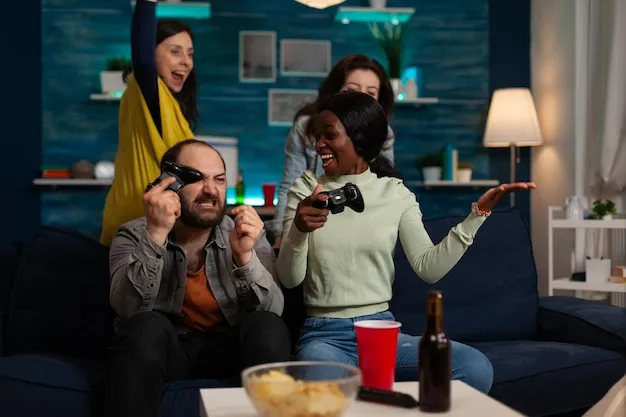
Photo: friends gaming together online feeling disconnected lonely, via img.freepik.com
Picture this: it's a Friday night, your Discord is popping, and you've finally synced schedules with three friends you haven't seen in months. The game loads. Everyone's in. And within twenty minutes, you're staring at the ceiling wondering why you feel completely, inexplicably alone.
If that hits a little too close to home, you're not broken — and you're definitely not the only one. There's a growing conversation happening among players, community designers, and mental health researchers about what might be gaming's most uncomfortable open secret: that multiplayer, the format literally built to bring people together, sometimes makes loneliness worse.
Welcome to the multiplayer paradox. And yeah, it's weirder than it sounds.
Proximity Without Presence
Here's the thing about online co-op that nobody puts in the marketing copy: being in the same game isn't the same as being in the same room. Obviously. But our brains don't always get that memo.
Psychologists who study digital social behavior have a term for this — social presence — which basically measures how "real" another person feels during a shared experience. In-person hangouts score high. Phone calls, medium. And text-heavy, task-focused online sessions? Often surprisingly low, even when the people involved genuinely care about each other.
When you're grinding a dungeon or coordinating a raid, the interaction gets compressed into function. You're communicating, sure, but you're communicating about the game. The texture of actual friendship — the tangents, the silences, the "wait, tell me more about that" moments — gets crowded out by callouts, cooldown timers, and the general noise of staying alive.
The game becomes the relationship. And the game, by design, doesn't care about you.
The Performance Problem
There's another layer here that doesn't get talked about enough: the pressure to perform enjoyment.
When you're gaming solo, you can be weird about it. You can spend forty-five minutes rearranging your in-game house. You can die to the same enemy eleven times and laugh about it privately. You can quit whenever you want without explanation.
Multiplayer removes that privacy. Suddenly you're not just playing — you're being seen playing. And for a lot of people, especially those who already carry some social anxiety, that visibility is exhausting.
Community managers at mid-size gaming studios have noticed this pattern in their player data. Sessions that should feel celebratory — guilds completing long-term goals, friend groups hitting milestones — often see a dip in re-engagement afterward. Players drop off. Not because the game got worse, but because the emotional labor of showing up socially, session after session, quietly depleted them.
It's the same reason some people dread parties they actually wanted to attend. The anticipation of performing "fun" for an audience, even a friendly one, can be more draining than the fun itself is restorative.
Asynchronous Drift
Then there's the time problem.
American adults are busy in ways that don't sync neatly. Different time zones, different work schedules, kids, commutes, the general chaos of being a person in 2025. So a lot of online gaming between friends happens asynchronously — one person plays Tuesday night, leaves a note in the shared base, another person picks it up Thursday morning.
Games like Minecraft, Stardew Valley co-op, and various survival titles have built entire communities around this kind of staggered play. And it works, up to a point. But there's a loneliness baked into it that's easy to miss.
You're sharing a world without sharing a moment. You see the evidence of your friends — the building they started, the resources they left — but they're not there. It's like coming home to a house where someone clearly just left. The warmth is implied but absent. Over time, that absence accumulates.
Some players describe it as feeling like a ghost in their own friend group. Present on paper, invisible in practice.
What Actually Connects People
So is online multiplayer just a trap? Not exactly. But the experiences that actually generate connection tend to share a few specific qualities — and they're not always the ones developers prioritize.
Low stakes, high chaos. Some of the most genuinely bonding multiplayer moments happen in games where nothing matters much. Among Us at the height of its run wasn't special because of its mechanics. It was special because it created conditions for people to be ridiculous together without consequence. The laughter was real because the pressure was fake.
Space for the off-topic. Games that build in natural pause points — loading screens, base-building phases, travel time — accidentally create room for actual conversation. The chat that happens while you're waiting for the next wave to spawn is often more connective than anything the game itself generates.
Shared failure. Weirdly, wiping on a hard boss together builds more community than winning does. Struggle, commiseration, the mutual "okay what did we just do" debrief — that's the stuff friendships are made of. Games that are too polished, too frictionless, sometimes sand away the exact texture that makes shared experience meaningful.
Researchers studying online community design have started pushing back on the idea that seamlessness equals satisfaction. Friction, when it's the right kind, creates intimacy.
Designing for Real Connection
The good news is that some corners of the gaming industry are actually paying attention to this. A handful of indie studios and community-forward developers have started asking different questions during the design process — not just "how do we keep players in the game" but "how do we make players feel seen by each other."
That means building in moments that aren't about the game. Emote systems that go beyond combat taunts. Shared spaces that exist purely for hanging out. Asynchronous messaging tools that feel personal rather than functional. Small design choices that signal: the people here matter more than the objectives.
It also means acknowledging that the best multiplayer experiences might not look like multiplayer at all. Sometimes connection happens in the margins — in the voice chat that keeps running after everyone logs off, in the screenshot someone takes and sends later, in the inside joke that outlives the game by years.
The Utopian Version of This
Here at Yu-Topia, we spend a lot of time thinking about what digital spaces could be at their best. And the honest answer is that the utopian version of online gaming isn't a bigger lobby or a more sophisticated matchmaking algorithm. It's something quieter.
It's a game that makes you feel like the person next to you — even if they're three states away — is actually, genuinely there. That your shared experience left a mark on both of you. That you'll have something to text about tomorrow that has nothing to do with loot drops.
That's the bar. And a lot of multiplayer gaming isn't clearing it yet.
But the players who are naming this feeling, the developers who are starting to take it seriously, and the communities building something more intentional on the margins — they're pointing toward something real.
You don't have to settle for a full lobby that feels empty. The better version of this exists. It's just going to take all of us demanding it.