The Magic Happens When You Stop Trying: How Unscripted Gaming Moments Beat Perfect Play Every Time

Photo: Jibrin Reuben, CC BY-SA 4.0, via Wikimedia Commons
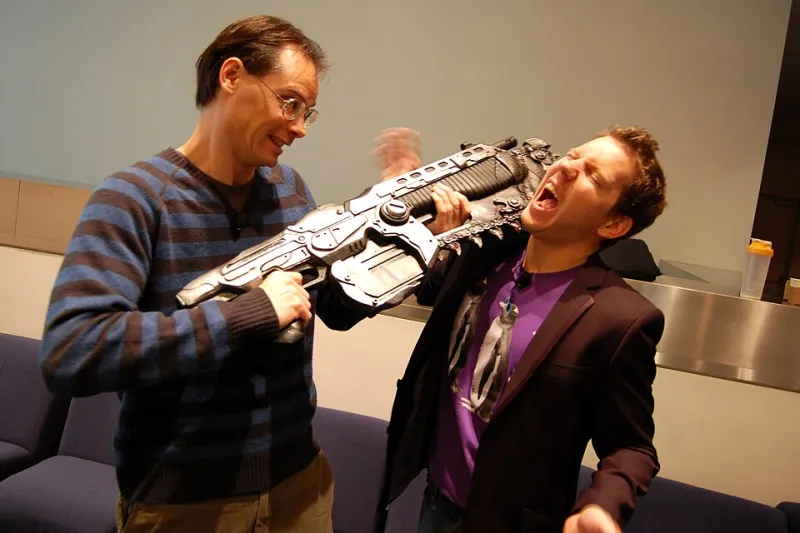
Ask any gamer about their all-time favorite moment, and odds are it's not the time they perfectly executed a meta build or speedran a dungeon without a single mistake. It's the time the squad attempted a completely unhinged plan at 2 a.m. that had absolutely no business working — and somehow did. Or the time a random glitch turned a serious raid into a full comedy bit that had everyone crying laughing in voice chat.
That's the paradox sitting at the heart of modern gaming: the systems are built for optimization, but the soul lives in the chaos.
Built to Be Beaten, Not Loved
Game designers spend enormous resources engineering balance — tuning damage numbers, calibrating difficulty curves, stress-testing economy loops. All of it is designed so players can find the most efficient path from A to B. And players respond accordingly. Tier lists, meta guides, and DPS calculators have become as much a part of gaming culture as the games themselves.
But efficiency has a cost. When everyone's playing the same optimal strategy, the experience starts to flatten. You stop playing and start executing. There's a difference, and most of us have felt it — that hollow feeling when you've cleared the content perfectly and walked away weirdly unsatisfied.
Game designer and community consultant Rae Holloway, who has worked on several indie multiplayer titles, puts it bluntly: "We design for clarity and fairness, but the moments players remember? Those almost always happen in the cracks. The stuff we didn't fully account for."
The Unplanned Is Where the Story Lives
Think about the most-shared gaming clips on social media right now. Almost none of them are clean plays. They're the wild clutches, the physics engine going completely haywire, the teammate who pulled off something so dumb it looped back around to genius. These moments spread because they feel alive — unpredictable in a way that a perfectly executed rotation simply isn't.
There's actual psychology behind this. Researchers studying play behavior have found that surprise and novelty are among the strongest drivers of positive emotional memory. When something unexpected happens, the brain tags it as significant. A flawless victory is satisfying in the moment, but a beautiful disaster is a story you tell for years.
And gaming communities are built on stories.
When the Meta Gets in the Way
Here's where it gets complicated. The same internet that hands you a tier list in thirty seconds also creates enormous social pressure to use it. Show up to a raid without the optimal gear score, pick an off-meta character in a ranked match, or suggest a strategy that deviates from the YouTube guide — and you'll find out fast that some communities have very little patience for experimentation.
That pressure doesn't just kill fun. It kills creativity. It narrows the possibility space until the game stops being a world to explore and becomes a checklist to complete.
Streamer and community organizer Darius Venn, who runs a popular Discord server built around what he calls "chaotic co-op," saw this happening in real time. "People were joining looking for chill sessions and leaving because they felt like they were being graded," he says. "We had to actively build a culture where it was okay to try dumb stuff. Like, encouraged to try dumb stuff."
His solution? Dedicated "no-meta nights" where optimized builds are banned, and the only rule is that everyone has to try something they've never done before. The sessions have become the most-attended events his community runs.
Designing Spaces Where Mess Thrives
The good news is that some developers are starting to take notes. Games like Baldur's Gate 3 have been celebrated not just for their depth but for how gleefully they reward lateral thinking and off-script decisions. Players have discovered wildly unintended solutions to major story beats — and instead of patching them out, the developers leaned in, treating player creativity as a feature worth preserving.
Sandbox games have long understood this implicitly. Minecraft built an entire cultural phenomenon on the idea that there's no wrong way to play. But even traditionally structured games are finding ways to widen the lane. Some are introducing "chaos modes" or randomizer options that deliberately scramble the expected experience. Others are building community challenges around self-imposed restrictions — no-damage runs, pacifist playthroughs, randomized item pools.
The through-line is the same: take away the optimal path, and players start playing again.
The Utopian Case for Imperfection
At Yu-Topia, we talk a lot about what a perfect gaming world actually looks like. And here's a maybe-counterintuitive take: it probably doesn't look perfectly optimized. It looks like a space where you're free to be bad at something and have a great time anyway. Where the best play of the night is the one nobody planned.
There's something almost philosophical about it. The pursuit of perfection in gaming — the min-maxing, the efficiency chasing, the endless grinding toward an optimal state — mirrors a broader cultural tendency to treat every experience as something to be maximized. But joy doesn't work like that. It tends to show up sideways, in the margins, when you're not looking directly at it.
The most memorable gaming experiences aren't the ones where everything went right. They're the ones where everything went gloriously, hilariously wrong — and somehow, that was exactly right.
Let It Be Messy
If you've been feeling a little burned out on the grind, a little detached from games that used to feel electric, it might be worth asking whether you've optimized the fun right out of your sessions. Try something deliberately inefficient. Pick the character you've never played. Ignore the guide. Invite a friend who doesn't know what they're doing and let them drive.
The leaderboard will still be there. The meta isn't going anywhere. But the memory you make on a random Tuesday night when someone suggests the world's worst plan and it somehow works? That's the stuff that sticks.
And honestly? That's the closest thing to a gaming utopia most of us will ever find.