When the Dream World Dims: The Hidden Cost of Living Online

Photo by Photo by Shoeib Abolhassani on Unsplash on Unsplash
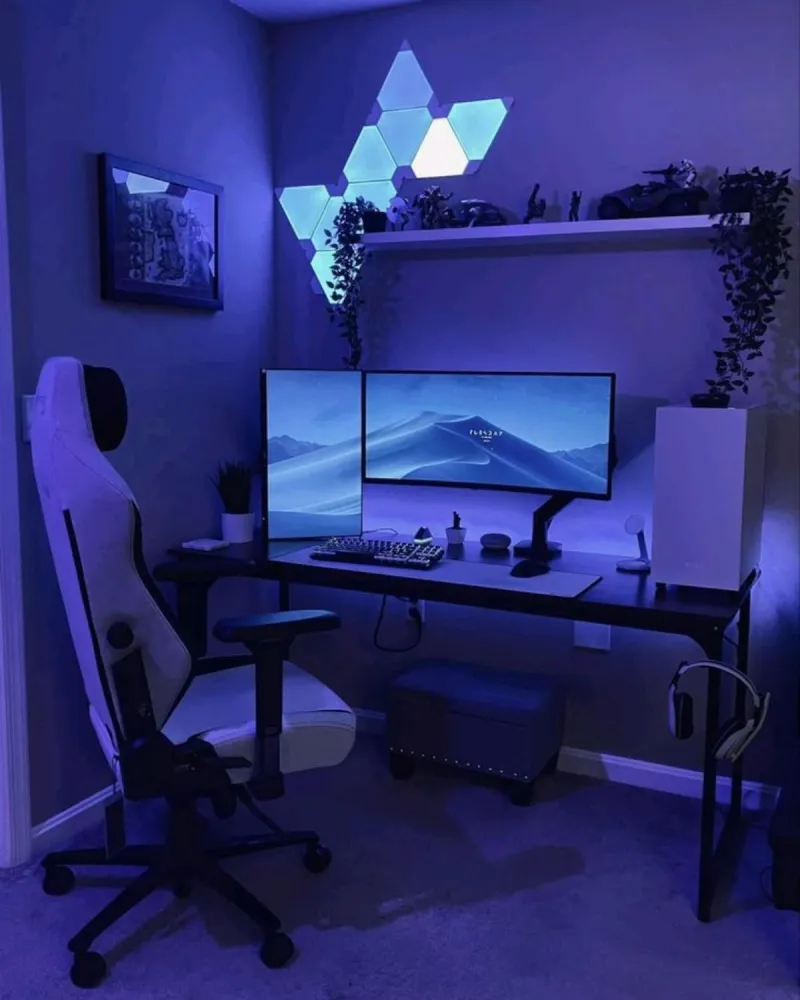
There's a moment a lot of gamers and content creators know all too well. You close your laptop after hours inside your favorite virtual world — maybe a lush, meticulously designed RPG town, maybe a perfectly curated Discord server full of people who get you — and you look around your actual apartment. The dishes are still in the sink. Your phone has seventeen notifications you don't want to read. The lighting is wrong. Everything feels a little... flat.
That feeling has a name now. Therapists are increasingly calling it escapism burnout, and it's quietly becoming one of the defining psychological experiences of heavily online Americans in their 20s and 30s.
The Utopia You Built Might Be Working Against You
Here's the uncomfortable truth: the more beautiful and responsive your digital environment is, the harder real life can hit when you log off. Online worlds are designed to reward you. Games give you progress bars, loot drops, and communities that celebrate your wins. Social platforms surface your best moments and let you curate your identity with a precision that Monday morning at work simply doesn't offer.
Dr. Priya Mehta, a licensed psychologist based in Austin, Texas who works with a growing number of gaming-adjacent clients, puts it plainly: "The brain doesn't distinguish between types of reward. When you spend four hours in an environment that's constantly giving you feedback, validation, and a sense of forward momentum, real life — which is messy, slow, and often thankless — starts to feel broken by comparison."
This isn't an argument against gaming or online communities. Not even close. But it is a call to understand what's happening underneath the surface when digital spaces start feeling more real than reality.
Creators Are Burning Out on Their Own Paradise
Interestingly, this phenomenon isn't limited to passive consumers. Some of the most affected people are the builders themselves — the streamers, the Discord moderators, the YouTubers who have spent years constructing aspirational online personas and communities.
Take Marcus, a 29-year-old content creator from Portland who built a following of over 80,000 subscribers around cozy gaming content. He asked us not to use his last name. "I made this whole brand around peaceful, aesthetic gaming. Cottagecore vibes, no toxicity, just good vibes. And ironically, stepping away from that persona — even just to go grocery shopping — started to feel jarring. Like, who am I when I'm not the calm, happy guy on camera?"
Marcus took a six-week digital detox last spring, something he'd publicly resisted for years because it felt like "career suicide." What he found on the other side surprised him. "Real life isn't worse than my channel. It's just different. I had to relearn how to find joy in things that don't have a view count."
This kind of recalibration is exactly what community managers and mental health professionals are starting to advocate for — not as a rejection of digital life, but as a necessary counterweight to it.
The Detox Trend Getting Serious Traction
Digital detoxes aren't new, but the way the gaming and creator communities are approaching them has matured significantly. What used to be framed as dramatic, all-or-nothing breaks — "I'm quitting the internet forever" videos that inevitably end in a return video three weeks later — is shifting toward something more sustainable.
Organizations like the Center for Humane Technology have been pushing for what they call "intentional use," and that language is trickling into gaming spaces. Some Twitch streamers now build scheduled offline days into their public calendars, treating them with the same seriousness as streaming slots. Certain gaming guilds have started implementing what members call "real-world check-ins" — brief, structured conversations during guild meetups about offline life and mental health.
Jordan Reyes, a community manager for a mid-sized gaming Discord with around 12,000 members, started running optional monthly "unplug threads" where members share what they did offline that week. "At first I thought it would flop. But it's consistently one of our most active threads. People are hungry to connect over real-life stuff. They just needed permission."
Finding the Balance Without Losing the Magic
None of this means you need to abandon the digital spaces you love. The goal isn't to make real life your only world — it's to stop letting your virtual world make real life feel like a consolation prize.
A few things that therapists and community veterans consistently recommend:
Audit your transitions. Pay attention to how you feel in the 30 minutes after you log off. Consistently feeling deflated or irritable is a signal worth taking seriously.
Build analog rituals. Something as simple as a 10-minute walk before gaming sessions can help your brain maintain a clearer distinction between spaces — and make re-entry into the physical world less jarring.
Let your online community support your offline life. The best digital spaces don't replace real-world connection; they reinforce it. If your community only exists inside the platform, that's a fragile foundation.
Give reality the same grace you give your favorite game. Real life doesn't have tutorial prompts or guaranteed rewards. That's not a flaw — it's what makes the wins actually mean something.
The Real Utopia Might Be Somewhere in Between
At Yu-Topia, we genuinely believe that digital worlds can be beautiful, meaningful, and worth investing in. But the most perfect world is one you can actually live in — and that means building a life where your online and offline selves aren't at war.
The creators and players who seem to thrive long-term aren't the ones who found the perfect virtual escape. They're the ones who figured out how to carry a little bit of that creative energy, that sense of community and purpose, back into the messiness of real life.
The dream doesn't have to end when you close the tab. But it does need to coexist with the world outside it.