Free to Play, Forced to Follow: The Hidden Leash Inside Open-World Games

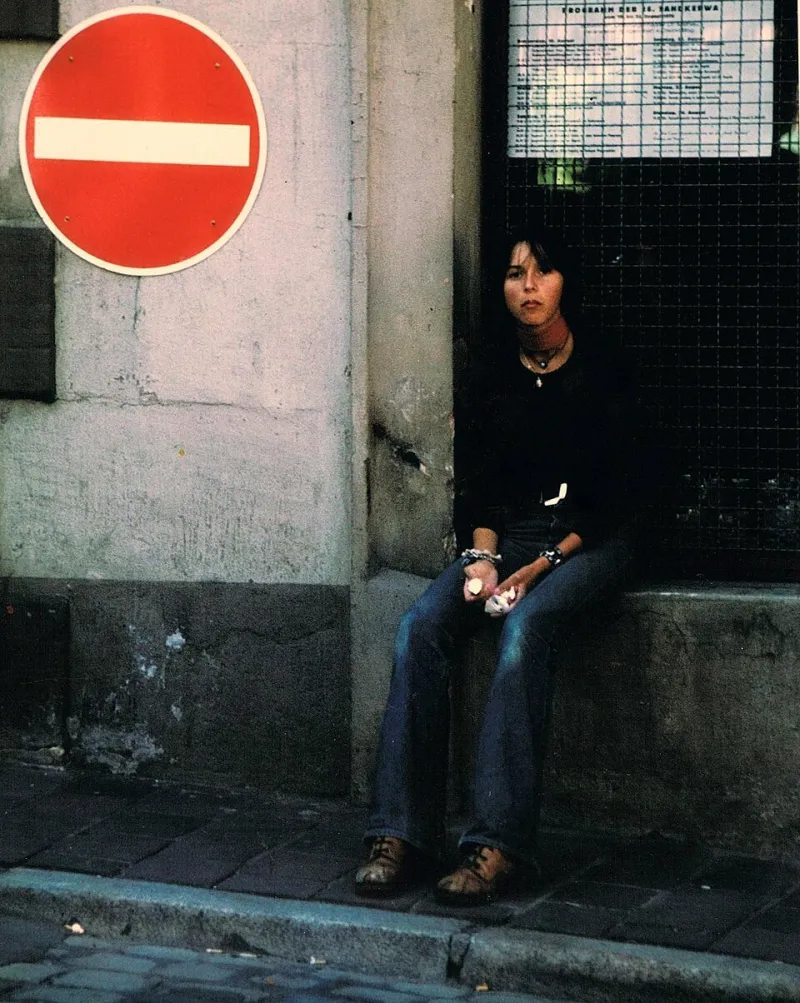
Photo: Steffen Prößdorf, CC BY-SA 4.0, via Wikimedia Commons
Picture this: you boot up the latest massive open-world RPG, and the game drops you into a sweeping vista that stretches to the horizon. Mountains to the north, a glittering coastline to the south, and a hundred little icons dotting your map like a constellation of possibility. The tagline promised you a living, breathing world where you write the story. You feel it — that electric sense of agency, of genuine freedom.
Except you don't actually have it. Not even close.
That's not cynicism talking. It's game design. And once you see the strings, you genuinely can't unsee them.
The Freedom That Isn't
Open-world and sandbox games — think The Legend of Zelda: Breath of the Wild, Red Dead Redemption 2, Elden Ring, or any of the sprawling Ubisoft map-checklist epics — are routinely marketed as experiences defined by player autonomy. You choose your path. You forge your legend. The world bends to your will.
But game designers aren't handing you a blank canvas. They're handing you an incredibly sophisticated paint-by-numbers kit and making the numbers invisible.
This isn't a conspiracy — it's craft. Developers spend years engineering what's called invisible funneling: the practice of shaping player behavior through environmental cues, reward timing, and difficulty gradients so subtle that players interpret their own compliance as personal choice. That road you decided to follow because it "felt right"? It was lit slightly warmer than the surrounding terrain. The dungeon you wandered into "on a whim"? It was placed precisely where your curiosity would naturally peak after 45 minutes of open exploration.
You weren't discovering the world. The world was discovering you — and gently herding you where it needed you to go.
The Psychology Behind the Illusion
There's a concept in behavioral psychology called autonomy bias — the human tendency to perceive our choices as self-directed even when external structures heavily constrain them. Game designers exploit this brilliantly. By giving players just enough genuine micro-choices (which weapon to equip, which side quest to tackle first, whether to sneak or charge), they create a felt sense of agency that masks the macro-level rails underneath.
Dopamine does the rest of the heavy lifting. Every quest marker pinged, every level gained, every loot chest cracked open triggers a small neurochemical reward that reinforces the loop. You're not just playing a game — you're being behaviorally conditioned to keep playing it, in the specific ways the designers intended, while believing the whole time that you're a free agent making sovereign decisions.
BF Skinner would have loved modern open-world design.
The variable reward schedule — where loot quality and quest outcomes are randomized just enough to stay unpredictable — is essentially a slot machine dressed up in fantasy armor. And just like Vegas, the house always wins. The house, in this case, being the engagement metrics that determine whether a studio greenlit a sequel.
When "Sandbox" Becomes a Cage
Sandbox games take this tension to its logical extreme. Minecraft, Terraria, No Man's Sky — these titles strip away explicit narrative rails and hand players raw materials. Build whatever. Go wherever. Be whoever.
And yet, within hours, most players are following remarkably similar progressions. In Minecraft, nearly everyone punches trees, builds a shelter, mines for iron, then diamonds, then attempts the Nether. Not because the game explicitly tells you to — but because the resource hierarchy, the crafting dependencies, and the subtle environmental storytelling all but guarantee that sequence. The "sandbox" has a very specific shape, and your "creative freedom" fits neatly inside it.
Game researcher and designer Jane McGonigal once described games as "the art of voluntary obstacles." That's a generous framing. A more critical read might be: games are environments where we enthusiastically submit to invisible authority structures and call it fun.
Why This Matters Outside the Game
Here's where things get genuinely interesting — and a little uncomfortable.
The same mechanisms at work in open-world games show up everywhere in modern American life. Social media platforms promise you a personalized feed, a space uniquely yours, while algorithmic architecture quietly determines what you see, feel, and care about. Subscription services offer "unlimited" access to culture while recommendation engines nudge you toward the content most likely to keep you subscribed. Even urban planning and retail design use environmental psychology to move bodies through spaces in ways that maximize desired behavior.
We're surrounded by systems that present themselves as liberating while actually functioning as highly optimized compliance machines. The open-world game is just the most honest version of this arrangement — at least in a game, someone eventually tells you that you won, and you can put the controller down.
In the real world, the map never runs out of icons.
The Utopia That Keeps Expanding
At Yu-Topia, we spend a lot of time thinking about what a genuinely good digital life looks like — one where creative expression and personal agency are real, not simulated. And games are central to that conversation, because they're one of the few spaces where millions of people actively seek out a version of utopia on a daily basis.
But utopia built on a hidden leash isn't utopia. It's a very comfortable cage with excellent graphics.
That doesn't mean open-world games are bad. Some of the most meaningful experiences in modern entertainment happen inside these carefully engineered illusions. The emotional weight of a Red Dead Redemption 2 sunset, the genuine wonder of cresting a Breath of the Wild peak — these are real, regardless of the design machinery producing them.
The question worth sitting with is: what would games look like if they actually delivered on the freedom they promise? What would life look like?
Playing With Eyes Open
Knowing the leash is there doesn't have to ruin the walk. Plenty of players find genuine joy in working with game systems rather than pretending those systems don't exist. Speedrunners, sequence-breakers, and modding communities actively interrogate the designed experience and build something new from it — which might be the closest thing to actual freedom these worlds allow.
But for everyone else — for the millions of players who boot up a sprawling open world and feel that rush of limitless possibility — it's worth pausing for a second before you follow that glowing quest marker into the distance.
Ask yourself: did you choose this path? Or did the path choose you?
The answer is probably both. And learning to hold that tension — to enjoy the designed experience while staying clear-eyed about its nature — might be the most useful skill a gamer (or a citizen) can develop right now.
The map is beautiful. Just remember someone else drew it.