The Lights Are On and Nobody's Home: What Happens to Digital Worlds After the Group Chat Dies
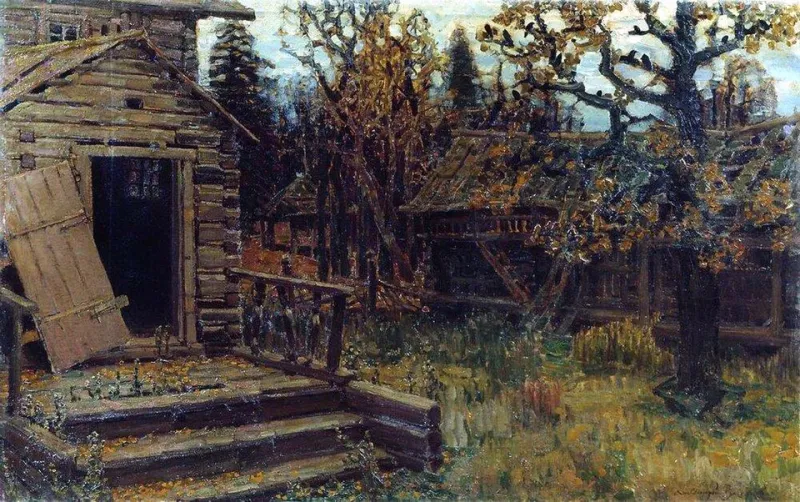
Photo: Apollinary Vasnetsov, Public domain, via Wikimedia Commons
Last winter, a Reddit user posted a screenshot from a Minecraft server they had not visited in six years. The spawn point was intact. A sign still read 'Welcome to the commune.' Chests were full of cobblestone nobody needed. The last login on the player list was from 2019. The server was still running because someone, somewhere, had kept paying the bill.
That image has become one of the defining artifacts of online life: the digital place that outlives the group chat. The guild hall in an old MMO. The shared Animal Crossing island. The Discord server with 12 members and 400 channels. These are not just files. They are rooms where a version of a friend group used to live.
The Ruins We Made
Most online spaces are designed to disappear. A lobby closes. A match ends. A seasonal server wipes. But player-built worlds are different. They persist because someone made a decision to keep them alive, or because no one has decided to turn them off. That in-between state is what makes them feel like ruins.
A ruin is not just a broken thing. It is a place where human intention outlasts the humans who were there. In a Minecraft server, you can see the ambition: the half-finished castle, the railway that goes nowhere, the chest room labeled 'do not touch.' In an MMO guild hall, you can see the social architecture: the trophy case, the message board, the empty officers' lounge. These places were built for a future that did not quite arrive.
Why We Go Back
People revisit old servers for the same reasons they visit hometowns. To check whether the place remembers them. To see if the tree they planted is still there. To feel the strange comfort of being somewhere familiar and utterly out of place.
There is also grief in it. Not always dramatic grief. Sometimes it is just the low-grade sadness of realizing a group has scattered. The friend who started the server got a job. The guild leader had a kid. The Discord went quiet, then quieter. The place remains, but the social contract that made it meaningful has expired.
And yet, revisiting can be a form of maintenance. You walk through the old base. You fix a broken door. You take a screenshot. You post it in the group chat, and for an hour everyone is back. The utopia was never perfect. It was a bunch of people agreeing to build something together for a while. The ruins are proof that the agreement was real.
Preserve, Delete, or Let It Drift
Eventually, someone has to decide what to do with the place. Preservation is expensive. Server bills add up. World files get corrupted. Hosting companies change ownership. Some players export the map and keep it on a hard drive. Some turn the spawn point into a memorial. Some wipe the server and start fresh, because the alternative is living in a museum.
Deletion is not always cruelty. Sometimes it is how a group admits that a chapter is over. The hardest version is drift: nobody deletes, nobody visits, and the place just keeps running on someone's credit card. That is the most common fate, and maybe the most honest. Most digital places do not get a funeral. They get a slow fade.
What Impermanence Teaches
The strange lesson of these abandoned worlds is that permanence was never the point. The utopian impulse—the desire to build a better place with other people—is real, even if the place itself is temporary. A guild hall does not have to last forever to have mattered. A Minecraft commune does not need a preservation society to have been a home.
If anything, the ruins make the original effort more beautiful. Someone chose to build a railway. Someone wrote a welcome sign. Someone kept the server online for years after the last login. That is a kind of care that does not fit neatly into a business model.
So maybe the question is not what we do with digital places after everyone logs off. It is what we learn from the fact that we built them at all. We are temporary creatures who keep making rooms for each other. Sometimes the room outlasts the group. Sometimes the group outlasts the room. Either way, the effort leaves a mark. And if you log in one last time, you can still see it.